The starting point: there are no pipes
A large share of homes in the Vega Baja and along the coast were built to get through summer. No boiler, no radiators, no ducting. In August nobody notices. From November, with nights at eight or nine degrees and walls that hold no heat, people notice.
When someone calls us about this, the first question is not which unit to fit. It is how many hours a day the house is lived in, and how many rooms need heating. The answer changes the whole solution.
Route one: use the air conditioning already on the wall
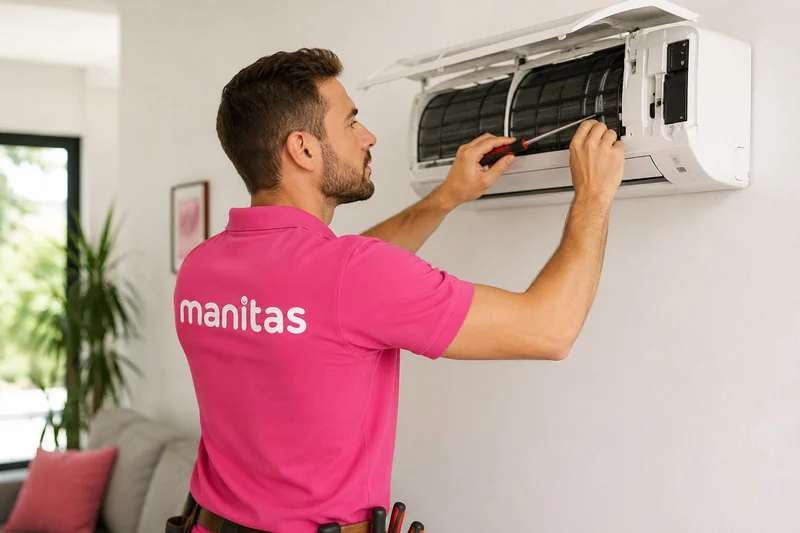
Almost every split fitted in the last fifteen years is a heat pump, so it heats as well as cools. Plenty of owners have one and do not know it, or tried it once, felt it was slow, and never went back.
This is the cheapest route because the machine is already paid for. What tends to be missing is a service: filters, gas charge and a thermostat set properly. A split left three summers without maintenance heats badly and draws more power. Before buying anything, it is worth finding out what the existing unit can do.
Route two: electric heat, room by room
Electric radiators, thermal emitters, a heated towel rail in the bathroom. Installation is quick and there is no building work. The drawback shows up on the bill: heating with an electric element costs considerably more per hour than a heat pump.
It makes sense for a house used at weekends, or for one room that stays cold. As the answer for a whole house through a whole winter, it is expensive.
Route three: a proper installation
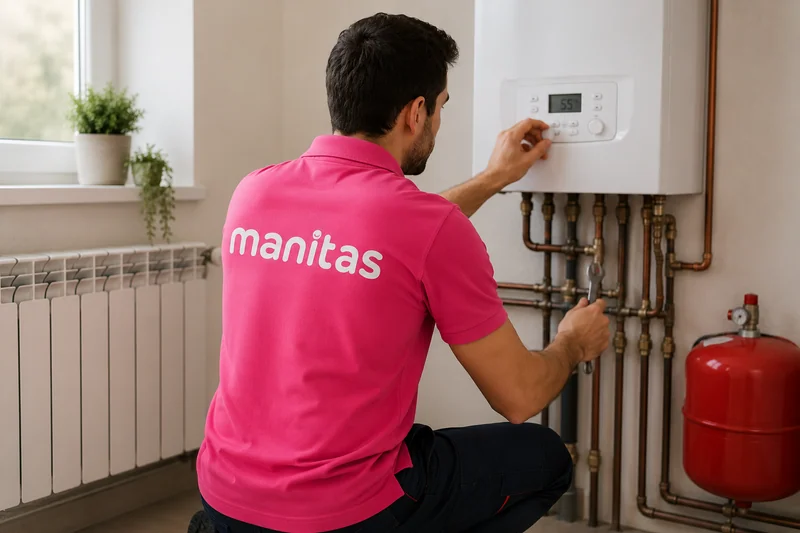
Boiler and water radiators, or underfloor heating when building work is already planned. This is the largest investment and the one that works best in a house lived in year round. It only stacks up alongside a renovation: chasing walls in a finished home multiplies the work and the dust.
What drives the quote
We do not give a price over the phone, because the variables matter more than the unit. Square metres to heat and ceiling height. Window insulation, which in many eighties-built homes is a single pane. Contracted power, which sometimes has to go up. And the distance between the consumer unit and where the machine goes.
The visit is there to measure that. We leave a written proposal, and if the cheap answer is to service what you already have, we say so.