Cold at the top, warm at the bottom: there is air
The most common case and the easiest. Hot water circulates through the bottom and air, being lighter, gathers at the top of the radiator, forming a pocket that stops water reaching the upper section.
Bleeding sorts it: with the radiator key and a container, open the bleed valve until water comes out instead of air. Then check the boiler pressure, because bleeding lowers it.
Cold at the bottom, warm at the top: there is sludge
The opposite symptom means the opposite thing: sediment settled in the bottom of the radiator, blocking circulation through the lower section. It is corrosion debris that builds up over the years.
Bleeding does nothing here. It needs the radiator flushing or, if several are affected, the whole system flushing. That is a job, not a five-minute operation.
Cold all over while the others heat: the valves
If one radiator is cold top to bottom and the rest of the house works, look first at its two valves: the inlet and the lockshield. One of them may be closed, sometimes since an old refurbishment.
If both are open and it stays cold, it is usually a seized thermostatic head. After seven months without moving, the pin sticks. A gentle tap and a little penetrating oil bring it back more often than people expect.
The whole house cold: it is not the radiator
If no radiator heats, the problem is upstream: system pressure too low, boiler locked out, circulation pump stopped, or a diverter valve stuck on hot water.
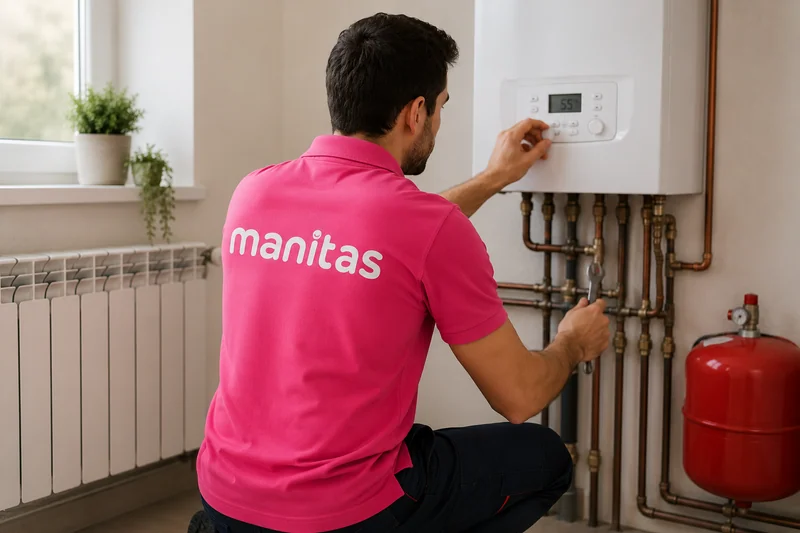
The first thing you can check is the boiler pressure gauge. If the needle sits below the marked band, top it up following the manual. If it drops again within days, there is a loss in the system and that does need a visit.
What to do every autumn
Bleed the radiators before the first cold, check the pressure afterwards, and turn every thermostatic head by hand once from minimum to maximum so it does not seize over the following summer.
That is twenty minutes once a year and it prevents half the November calls.