The timing comes from the water, not the calendar
The useful reference is water temperature, not a date. Below roughly fifteen degrees algae all but stop reproducing, and that is when maintenance can ease off. On the Costa Blanca that usually falls between late October and November, not September.
Closing too early is a common mistake: with the water still at twenty-two degrees in October, an abandoned pool turns green in ten days.
Active or passive wintering
Active wintering keeps the plant running a few hours a day through the winter. It uses some electricity, but the water keeps and reopening in spring is an afternoon's work. It is what we recommend in almost every case here.
Passive wintering, with the pool covered and the plant stopped, makes sense where it genuinely freezes. On the coast it rarely pays, because the water degrades and the May restart costs more than was saved.
Why emptying it is a bad idea
An empty pool is a pool at risk. The shell is designed to work with the water pushing back against the pressure of the ground, and without water, with a high water table after heavy rain, it can shift or crack.
Emptying only makes sense for a specific repair, and then it is done deliberately rather than at any time of year.
What gets done before easing off
The water is balanced, shock treated, the floor and walls cleaned properly and the filter checked. Then the timer is set to a few hours a day and the level dropped slightly if the pool is being covered.
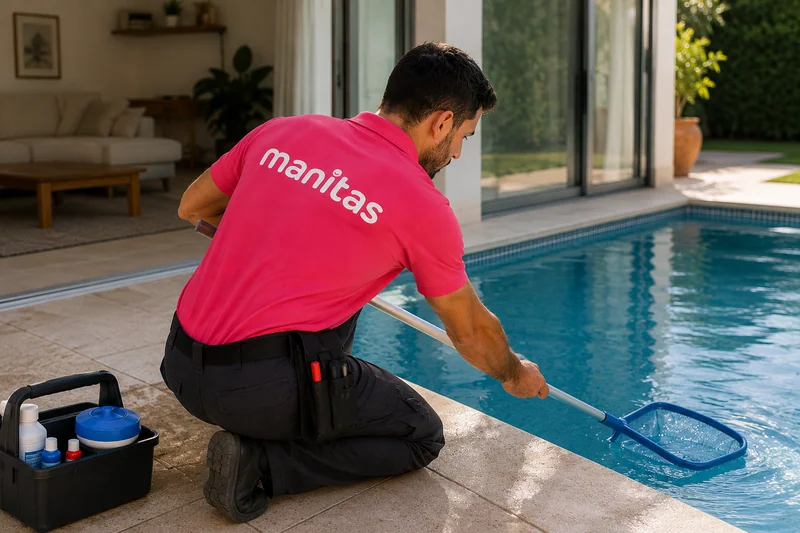
The skimmer and the pump basket still need a look now and then through the winter, especially in urbanisations with pines.
Autumn brings leaves and rainwater
A DANA changes the water chemistry at a stroke: rainwater comes in, salinity drops in a salt pool and the pH goes off. After a heavy storm it is worth measuring before adding anything by eye.
And the skimmer basket fills with leaves in two days. It is the number one reason a pump loses flow in November.