
Why summer demands a different rhythm
Pool water does not get dirty at a steady rate through the year: it spikes precisely in the months it is used most. The strong Costa Blanca sun degrades chlorine far faster than in winter, frequent use introduces sun cream, sweat and organic residue, and the dust and pollen of the season end up almost entirely on the water surface. Keeping the same maintenance routine in July and August that worked in spring usually means cloudy or algae-affected water within days.
The weekly routine that makes the difference
A daily check, even a quick one
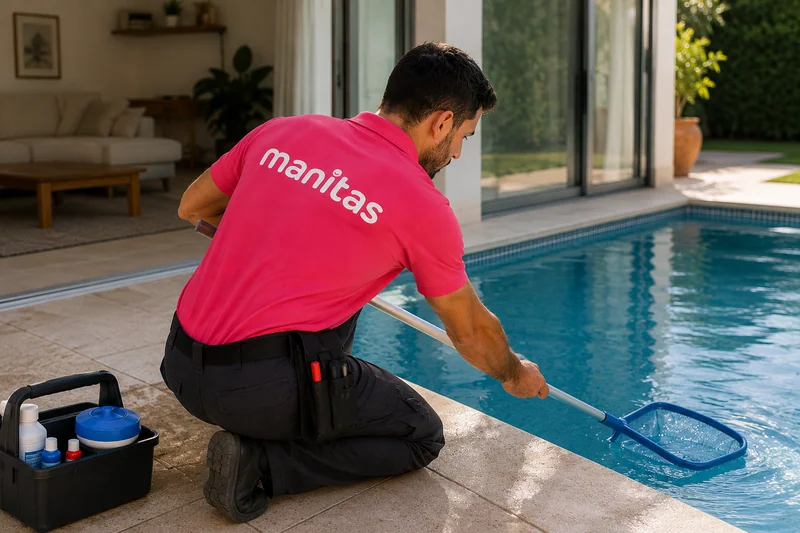
Skimming leaves and floating debris every morning, before they sink and settle on the bottom, takes only a few minutes and stops the filter working harder than it needs to through the day.
Chlorine checks two or three times a week
In peak season, with more swimmers and more hours of direct sun, chlorine levels can drop noticeably within days. Measure with test strips or a photometer several times a week, not just once, and adjust the dose to the reading rather than always adding the same amount.
pH checks
An unbalanced pH reduces the effectiveness of chlorine even when the quantity added is correct. The usual recommended range is between 7.2 and 7.6, and it deserves checking as often as the chlorine, since the two are directly related.
Cleaning the filter
The filter catches much of the dirt you do not see floating on the surface. In peak season, with the pool in constant use, backwashing needs doing more often than the rest of the year, following the specific guidance for the model installed.
- Skim leaves and floating debris every morning.
- Measure chlorine and pH two or three times a week.
- Backwash the filter more often than in low season.
- Brush the walls and floor weekly to stop algae taking hold.
- Check the water level, which drops faster in summer through evaporation and use.
The area's very hard water and what it does to a pool
The water in the Vega Baja, with a notably high lime content, tends to leave a whitish line at the pool edge and can make the water look cloudy even when chlorine levels are correct. A periodic anti-limescale treatment and a check of the calcium balance in the water — not just chlorine and pH — helps keep it clear without draining the pool prematurely. A sequestering agent added periodically reduces that whitish line at the waterline and stops dissolved calcium clouding the pool as the temperature rises.
How swimmer numbers change the equation
The number of people using the pool daily matters more than it seems. A villa that barely sees use in low season can go, in the middle of August, to several people swimming every day between family, guests and in some cases holiday-let visitors. Every swimmer introduces sun cream, sweat and organic residue that consume chlorine directly, so the higher the occupancy, the more the checking frequency should rise rather than staying at the same routine as the rest of the year.
Common summer mistakes
- Adding a large dose of chlorine all at once to compensate for heavy use, when the dose is better split into several smaller, more frequent applications.
- Ignoring pH on the assumption that only chlorine matters, when the two parameters work together.
- Letting several days pass without skimming, which overloads the filter and encourages algae in the less visible corners.
- Leaving the pool unprotected when the property is empty for several days, not even with a basic cover to reduce debris.
When professional maintenance makes sense
If the water looks cloudy despite correct chlorine and pH, if algae keep returning in the same areas, or if the filter has lost pressure and does not recover after a normal backwash, the whole system deserves a professional check — pump and filter included — before the problem worsens in the busiest weeks of the year.
Getting the pool ready before the season starts
For villas that spend much of the winter with the pool closed or barely used, a full service before the first serious heatwave pays off: check the pump, inspect the seals, clean the filter thoroughly and balance chlorine and pH from scratch rather than starting the season with the water as it was left months earlier. That service also tends to reveal small leaks in the installation that go unnoticed over winter but which, in high summer with the pump running many more hours a day, can translate into noticeably higher water consumption. Getting it done in advance avoids starting the summer already behind a problem that could have been anticipated.
If your pool will not stay clear despite following this routine, Manitas covers the whole Vega Baja and quotes free of charge to check the whole system.