Two very different scales of problem
When people think of drain unblocking they usually picture the same scene: a sink or a toilet that will not clear, sorted out with a hand-held electric machine in half an hour. But there is another category of failure, far less common and considerably messier, that no portable machine can resolve however long you persist. Telling the two apart early saves hours spent repeating an intervention that was never going to work.
Signs that point straight to a tanker truck
The blockage affects several neighbours at once
If several bathrooms or kitchens on different floors of a block go at the same time, the problem is not in any one flat but in the main stack or in a communal chamber that has collapsed. A technician with a hand-held machine can clear the run temporarily, but the volume built up in a pipe serving an entire building normally exceeds what that equipment can extract in a single visit.
Waste water surfacing in the garden or the yard
Once dirty water starts coming up through an inspection chamber, a yard gully, or simply pooling on the lawn, this is no longer a straightforward blockage but an obstruction with enough volume to have collapsed the buried section. This symptom is common in saturated septic tanks and in older chambers holding years of accumulated sediment.
Grease traps in restaurants and commercial kitchens
Hospitality premises produce far more grease than any household. When the grease trap saturates, the smell and the slow drainage are noticeable across the whole kitchen, and a hand-held machine barely relieves the symptom for a few days before it returns.
Urbanisations and plots with awkward access
In urbanisations away from the town centre, with large plots and buried pipe runs longer than usual, sediment accumulates for years before anyone notices, and by the time the blockage shows itself the volume is already significant. The answer in these cases requires high-capacity vacuum extraction, not just mechanical pushing.
Why a hand-held machine is not enough here
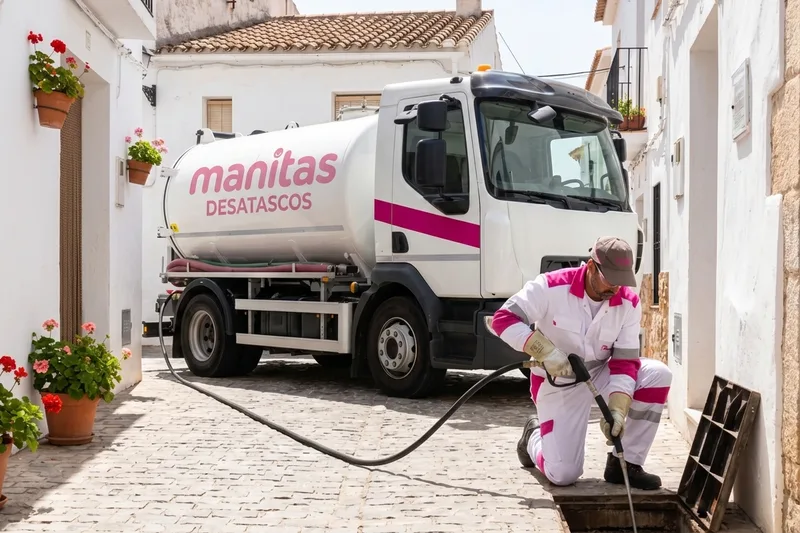
The technical difference is easy to grasp: a portable electric machine with a coil pushes or cuts through whatever is obstructing the pipe, but it does not remove the material from the run. In a normal domestic blockage that is enough, because the volume is small and the freed material carries on without trouble. In a high-volume blockage — a main stack, a collapsed chamber, a saturated tank — that same freed material simply travels a little further and settles again almost immediately. A tanker truck solves it differently: it combines a high-pressure jetting hose that scours grease and sediment off the pipe wall with a high-capacity vacuum system that physically removes that material from the run during the same visit.
| Situation | Usual solution |
|---|---|
| A single blocked sink or bathroom | Hand-held electric machine |
| Main stack of a block affecting several flats | Tanker truck with high-pressure jetting |
| Collapsed or overflowing communal inspection chamber | Tanker truck with vacuum extraction |
| Saturated grease trap in a restaurant | Tanker truck with high-pressure jetting |
| Full septic tank or cesspit | Emptying by tanker truck |
What to expect from a tanker truck visit
The technician first checks the access point, normally an inspection chamber or an external cover, before feeding in the hose. If the blockage recurs in the same section with no obvious cause after jetting, the usual next step is a camera inspection to find whether a root, a fractured pipe or a specific object keeps causing the build-up. In residents' associations with a history of recurring blockages, it is often worth setting up a scheduled inspection once or twice a year rather than waiting for the next emergency call once several households are already affected.
Why not subcontracting matters more than it sounds
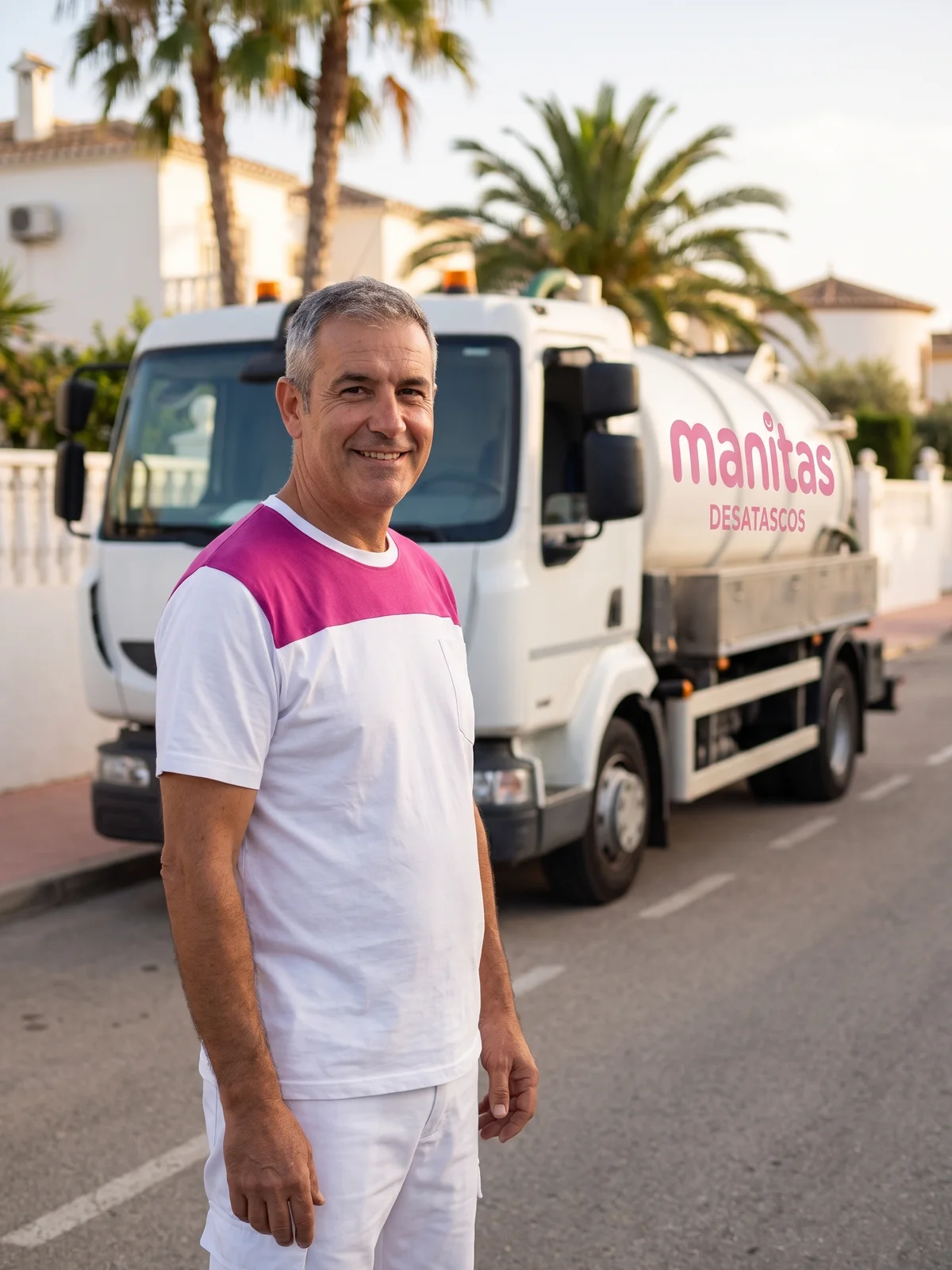
In high season, when the Vega Baja's population multiplies and demand for this service spikes, companies that depend on subcontractors for the tanker truck tend to quote long waiting times. Owning the fleet makes the difference precisely when urgency is highest: a block with several affected households, or a restaurant that needs it resolved before opening, cannot wait several days for a third party to have a slot.
What to have ready before you call
When you ring to request a tanker truck, it helps a great deal to describe what you have observed in some detail: whether the problem affects one property or several, whether there is smell, visible pooling or just slow drainage, and how long it has been going on. In residents' associations it is also useful to know whether any building plan or record shows where the main stack runs, because it speeds up finding the access point once the vehicle arrives.
On villa plots with a garden, another relevant detail is whether the chamber or tank has ever been opened since the property was bought. It is not unusual for an owner to have gone years without knowing where the access cover even is, and locating it before the visit saves time on the day.
If you recognise any of these signs in your building, your business or your home, Manitas covers the whole Vega Baja and quotes free of charge before any work starts.