
Why kitchen drains block so often on this coast
The kitchen sink is by far the most frequently blocked point in any home. Every day it takes cooking oil, pan grease, coffee grounds and small food scraps, all of which gradually stick to the inside wall of the pipe. In the Vega Baja one extra factor accelerates the process: the water here is very hard, and limescale combines with the grease to form a solid crust that narrows the pipe from the inside almost without you noticing. What started as a slightly slow drain becomes, a few weeks later, a complete blockage.
What you can try yourself before calling anyone
Most kitchen blockages, caught early enough, come free with household tools and a little patience. The order matters: always start with the gentlest method before moving to the next one.
Step 1: hot water, bicarbonate of soda and vinegar
First remove any standing water from the sink with a cup or a bowl. Pour half a glass of bicarbonate of soda straight down the drain, followed by half a glass of white vinegar. The fizzing reaction helps loosen the grease clinging to the pipe wall. Wait a quarter of an hour, then finish with very hot water — though stop short of boiling if your pipes are PVC, so you do not deform the plastic.
Step 2: the plunger
If the bicarbonate is not enough, a plunger usually finishes the job. Block the sink overflow with a damp cloth so the pressure concentrates on the drain, add a little water so the cup seals properly against the surface, and pump with firm vertical strokes — never sideways.
Step 3: check the trap
If the water still will not go down, the problem is usually in the trap, the curved section under the sink. Put a bucket underneath, unscrew the two collars by hand and remove the piece carefully. Almost every time you will find a compact ball of grease, hair and food waste sitting inside. Clean it out, check the condition of the rubber seal before refitting, and tighten the collars by hand without reaching for a tool.
- A plunger
- Bicarbonate of soda and white vinegar
- A small bucket and a cloth
- Rubber gloves
- A pipe wrench, for the trap collars only
What never to do to a kitchen pipe
Some things that feel like common sense do more harm than good, and can turn a simple blockage into a full plumbing repair.
- Never mix two different chemical drain cleaners: the reaction between them can release dangerous fumes in an enclosed space like a kitchen.
- Do not overuse aggressive chemical cleaners in older pipework: the heat they generate can dry out and crack seals already worn by years of service.
- Do not push stiff wire or a metal coat hanger down the drain: it can puncture a PVC elbow or get stuck further in, making the eventual repair harder.
- Do not pour boiling water straight down a PVC section: the plastic can deform and lose its seal over time.
When it stops being a household job
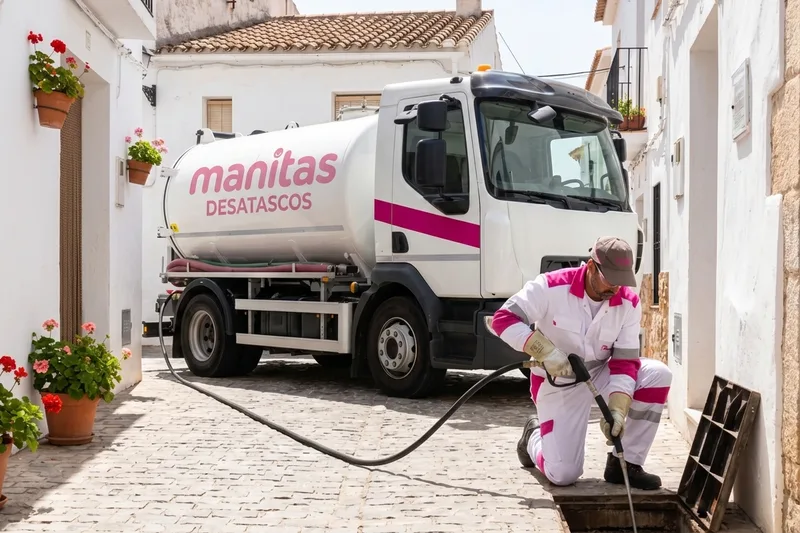
Certain signs tell you the blockage is not in the trap but further in, in the branch that connects to the building's main stack. If several points in the property gurgle at once when you empty the sink, if the blockage comes back within weeks of being cleared, or if water rises in the shower tray exactly when you use the kitchen, stop pushing with household methods. At that point an electric drain machine with a flexible coil reaches much further than any plunger, and if the blockage keeps returning with no obvious cause, a camera inspection shows exactly what is happening inside the pipe before anyone intervenes blind again.
What a professional does that you cannot replicate at home
When a blockage survives all three steps above, a technician normally reaches for an electric machine with a flexible coil, able to travel several metres inside the pipe and mechanically cut through the crust of grease and limescale rather than just pushing it along, which is the most a plunger can achieve. That difference matters: shoving the plug into the main branch without really breaking it up buys a few weeks of relief before it returns, whereas the coil leaves the inside of the pipe genuinely clean along its whole run. In kitchens with a long history of blockages, it is also common to check whether a grease trap is undersized or simply absent — a frequent finding in older refurbishments where one was never fitted.
How to stop it happening again
Kitchen prevention is simple and takes less than a minute a day. Let frying oil cool in a container and put it in the bin, never down the sink. Fit a mesh strainer over the drain to catch solids before they reach the pipe. Once a month, repeat the bicarbonate and vinegar routine as preventive maintenance, not only as an emergency fix once the water is already standing.
In holiday rentals, where the sink gets heavy use from a stream of different guests and nobody really controls what goes down it, the trap is worth checking more often than usual — ideally between stays, so a blockage does not ruin the first night of a new booking.
If the blockage will not shift with these steps, or you would rather a professional handled it from the start, Manitas covers the whole Vega Baja and quotes free of charge.