
The order of magnitude
A portable heater normally draws between fifteen hundred and two thousand watts. That is more than the rest of a room's sockets combined, and around twenty times what an LED bulb uses.
That draw is perfectly normal for a sound socket on a properly sized circuit. What is not normal is running it through a four-euro extension lead alongside the television and the router.
Where it actually gets hot
The cable is rarely the problem. The point that heats is always a contact: the plug inside the extension lead, the lead inside the socket, or a loose screw inside the wall socket itself.
A loose contact with two thousand watts passing through generates heat at a tiny point. That is the origin of most of the melted sockets we see in January, and the smell of hot plastic is the last warning before it.
The three signs not to let pass
A plug that is warm or hot as you pull it out. A socket that has yellowed around the holes. And a heater that trips the RCD when you switch it on.
The third is the most ignored, because resetting it is enough. An RCD tripping is not a whim: it is detecting an earth fault, and it is telling you so.
What gets checked in a property around here
Many eighties and nineties properties in the area were designed without electric heating, with a single socket circuit per floor. Adding two heaters in November changes the load distribution in a way nobody planned for.
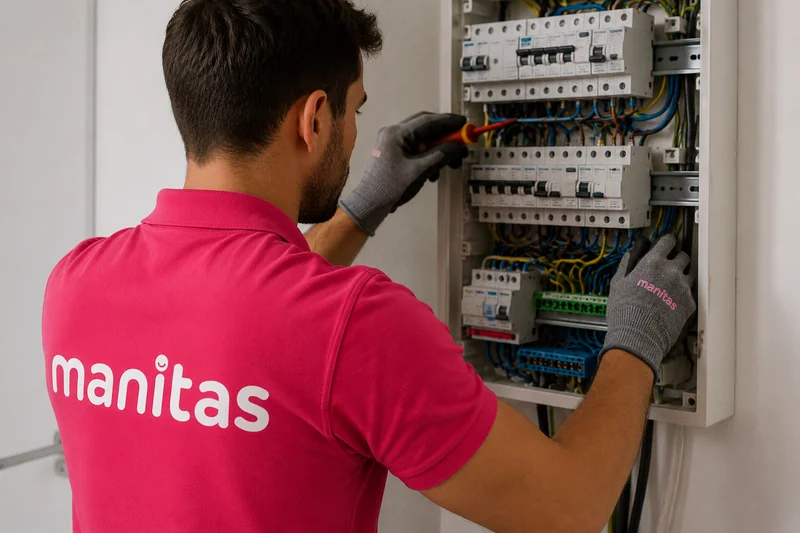
The inspection looks at three things: the condition of the sockets that will carry the heater, the sizing of the circuit, and whether the consumer unit has proper RCD protection. It is one visit, done before the cold rather than after the melted socket.
What is reasonable in the meantime
Heater straight into the wall socket, never on an extension lead or a coiled extension cable. One per circuit. And never left running overnight in a room with the door shut.
If the property is rented or used seasonally, checking the consumer unit once is worth the peace of mind for the four months that follow.